 Not necessarily. While climate change is a serious problem that does influence the development of plants, and I think we'll see more of this as temperatures continue to rise, this phenomenon can happen regardless. It's actually pretty simple. To a plant, what are the external factors that trigger flowering at a particular time? Weather, temperature, and amount of sunlight are the big influences. A plant that blossoms in March-April, for instance, is triggered by a certain amount of sunlight (not as short as a winter day, and not as long as a summer day), a certain temperature range (again, not as cold as winter, and not as hot as summer), and rainfall. In the summer months, most notably, there's a significant drop in rainfall and rise in temperature. In the fall, the rains start up again, and the plants experience those in-between temperatures and daylengths that are similar to the springtime (think of a bell curve with a peak in the summer). Sometimes there's enough similarity between the spring and autumn environmental conditions that it triggers a surprising, albeit weaker, flush of blooms.
Monday, December 9, 2013
Why do spring flowering plants sometimes bloom in the fall?
Last month I was asked by a friend why certain plants are sending out blooms in autumn, when they normally flower in the spring. Is it -- dun dun dun -- global warming?
Not necessarily. While climate change is a serious problem that does influence the development of plants, and I think we'll see more of this as temperatures continue to rise, this phenomenon can happen regardless. It's actually pretty simple. To a plant, what are the external factors that trigger flowering at a particular time? Weather, temperature, and amount of sunlight are the big influences. A plant that blossoms in March-April, for instance, is triggered by a certain amount of sunlight (not as short as a winter day, and not as long as a summer day), a certain temperature range (again, not as cold as winter, and not as hot as summer), and rainfall. In the summer months, most notably, there's a significant drop in rainfall and rise in temperature. In the fall, the rains start up again, and the plants experience those in-between temperatures and daylengths that are similar to the springtime (think of a bell curve with a peak in the summer). Sometimes there's enough similarity between the spring and autumn environmental conditions that it triggers a surprising, albeit weaker, flush of blooms.
Not necessarily. While climate change is a serious problem that does influence the development of plants, and I think we'll see more of this as temperatures continue to rise, this phenomenon can happen regardless. It's actually pretty simple. To a plant, what are the external factors that trigger flowering at a particular time? Weather, temperature, and amount of sunlight are the big influences. A plant that blossoms in March-April, for instance, is triggered by a certain amount of sunlight (not as short as a winter day, and not as long as a summer day), a certain temperature range (again, not as cold as winter, and not as hot as summer), and rainfall. In the summer months, most notably, there's a significant drop in rainfall and rise in temperature. In the fall, the rains start up again, and the plants experience those in-between temperatures and daylengths that are similar to the springtime (think of a bell curve with a peak in the summer). Sometimes there's enough similarity between the spring and autumn environmental conditions that it triggers a surprising, albeit weaker, flush of blooms.

Sunday, December 8, 2013
Wishlist

 I've been asked a few times about holiday gift ideas, and while there's normally nothing I really need, this year I do have a horticulture-related wishlist. There are some books and equipment I'll need to purchase in the near future as I get started on my new path, and any help would be greatly appreciated.
Jami's Amazon Horticulture Wishlist
Wednesday, November 27, 2013
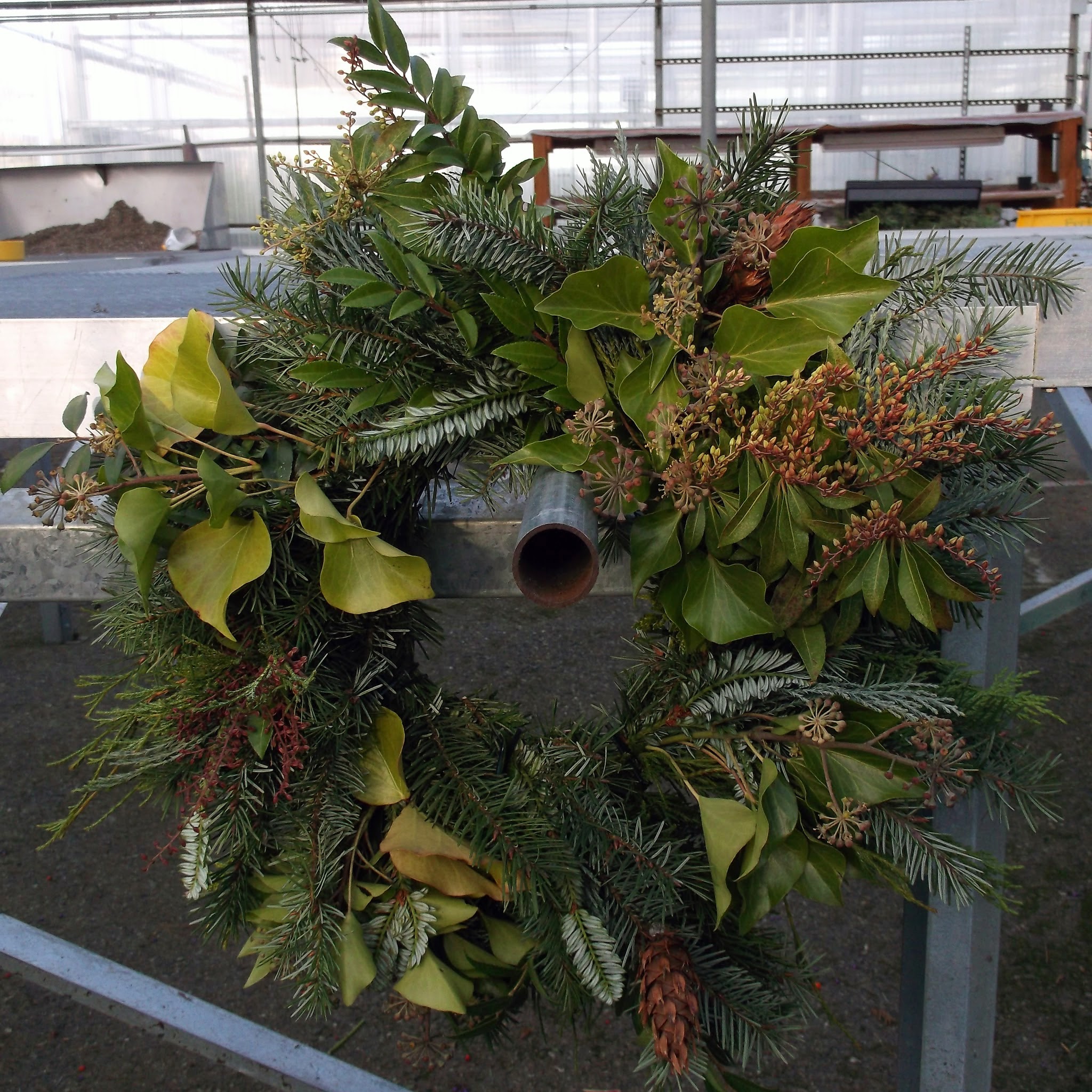
Wreath Making
One of the many cheerful highlights of fall quarter is our annual wreath-making party. We gathered base and flair material from the campus and arboretum (and even from my own neighborhood after that big windstorm knocked down some Doug-fir branches) and compiled them into wreaths for the two days before Thanksgiving. I ended up making eight, and I still have some left, if you’re interested in a very local, handmade wreath. And for you plant nerds, there’s lots of great plant ID material in these creations!




Friday, November 15, 2013
November Blues? More like November Blooms!
Mid to late autumn is a difficult time of year. The deciduous trees trees and shrubs are well on their way to nakedness, and many perennials are dying back for the winter. The days are shorter, and the drizzly rain often brings about the usual Pacific Northwest gloom. And November in particular is not known for its flowers.
But despair not! There are a few rare plants that flower during this time of year, and I think that makes them all the more special for their uniqueness. Let's take a look.
The first one to come to my mind is the Camellia sasanqua, which bloomed in our arboretum almost like clockwork at the very beginning of November. The flowers are typically in the white to pink range, and some cultivars are mildly fragrant. They contrast nicely with the leathery, dark green foliage, making it a great year-round evergreen shrub.
The strawberry tree is simply gorgeous. What is there not to love about this plant? Its cute little clusters of white, urn-shaped flowers (classic Ericaceae family) bloom October-November, it's evergreen, it's got attractive shaggy bark, and the bonus is that the fruit takes a year to ripen, meaning you're seeing large, edible, orange-red fruits at the same time as the flowers! If you want autumn interest in the garden, you've got to have a strawberry tree. We've got a few on campus, and they're such a delight!
Fatsia japonica already makes a bold statement in the garden, with its large, leathery palmate leaves and long petioles. But it gets even better in the fall with its large terminal clusters of white flowers. Even the prominent flower stalk is white!
The Holly-leaf Osmanthus is a dense evergreen shrub with cool leaf shape diversity. Its white little flowers come out around October-November in the plant's leaf axils. And they're fragrant!
The Dawn Viburnum blooms in late fall and winter, after leaf drop. Talk about highlighting the flowers! Just when its bare branches make you think it's another run-of-the-mill deciduous shrub, you get hit with a lovely display of pinky-white color. As Michael Dirr, author of that 1,325-page Manual of Woody Landscape Plants tome I've come to love, would say: "A garden without a Viburnum is akin to life without music and art." Indeed!
Hardy Cyclamens are cool season perennials that pop up and say hello just when you've almost forgotten about them. This is one of Don's favorite plants, so I'll let him share the love: http://lwtchort.wordpress.com/2010/10/28/for-the-love-of-cyclamen/
These are a few plants to get you thinking. Of course there are plenty of plants that are bursting with fruit right now, and they do wonders to bring color to the landscape, but these plants are notably unique in their flower time. What autumn blooms do you enjoy seeing in the Pacific Northwest?
 |
 |
| Camellia sasanqua, OSU | Camellia sasanqua, OSU |
 |
 |
| Arbutus unedo, OSU | Arbutus unedo, OSU |
 |
| Fatsia japonica, OSU |
 |
| Osmanthus heterophyllus, OSU |
 |
 |
| Viburnum x bodnantense 'Dawn', OSU | Viburnum x bodnantense 'Dawn', OSU |
 |
 |
| Cyclamen coum, Great Plant Picks | Cyclamen hederifolium, Great Plant Picks |
These are a few plants to get you thinking. Of course there are plenty of plants that are bursting with fruit right now, and they do wonders to bring color to the landscape, but these plants are notably unique in their flower time. What autumn blooms do you enjoy seeing in the Pacific Northwest?
Fun Friday: 6 Ways Mushrooms Can Save the World
It cannot be understated: mushrooms are absolutely amazing, and vital to our survival. Mycologist Paul Stamets explains why in this TED talk:
"The time to act is now. Waiting for science and society to wake up to the importance of these ancient Old Growth fungi is perilously slow and narrow in vision. The meager attempts thus far may be too little, too late. Unless we collectively pool our resources, the mushroom genome will become increasingly threatened, and therefore, our very existence may be at stake. The loss of these keystone organisms should be an ecological call-to-arms for all concerned about our children's future and the future of this planet.
"The rainforests of the Pacific Northwest may harbor mushroom species with profound medicinal properties. At the current rates of extinctions, this last refuge of the mushroom genome should be at the top of the list of priorities for mycologists, environmentalists and government. If I can help advance this knowledge, I will have done my part to protect life on this planet. And yet, if it were not for our customer's contributions, with our limited finances, this goal could not be achieved."
Friday, November 8, 2013


Friday, October 25, 2013
Fun Friday: GMOs
I have to admit: I almost don't want to mention this topic because of how heated the debates are getting over the production, labeling, consumption, and patenting of genetically modified foods. However, the truth still remains that new technology involving the very food that we eat requires careful study and consideration. This is the second Fun Friday discussion my horticulture class has had on the subject, and I'm glad we've taken some time to talk about it. It's important that we all try to stay objective and look at the whole picture of what's happening here, and that's hard! There's a lot of misleading data, emotional arguments, and propaganda to wade through, and it's difficult to filter out the noise. Now with Initiative 522 on the ballot in Washington to label GM foods, the pressure has only increased to find the right answers.
People have valid concerns. I know it's tempting to shove everyone with hesitation or concern into the extreme anti-science and anti-GMO camp, but I don't think that's a fair characterization (and it's one that doesn't foster useful communication and education). I'd venture to say that most people are genuinely seeking answers and want to understand what this new technology is all about. In light of that, I'd like to share a video by Bill Nye that takes a pretty balanced approach to explaining the history and science of GM food. It's a little simplified (and has those classic silly Bill Nye moments), but I think it does a good job of describing what genetic modification is and who the big players are in this debate.
People have valid concerns. I know it's tempting to shove everyone with hesitation or concern into the extreme anti-science and anti-GMO camp, but I don't think that's a fair characterization (and it's one that doesn't foster useful communication and education). I'd venture to say that most people are genuinely seeking answers and want to understand what this new technology is all about. In light of that, I'd like to share a video by Bill Nye that takes a pretty balanced approach to explaining the history and science of GM food. It's a little simplified (and has those classic silly Bill Nye moments), but I think it does a good job of describing what genetic modification is and who the big players are in this debate.
Subscribe to:
Posts (Atom)